
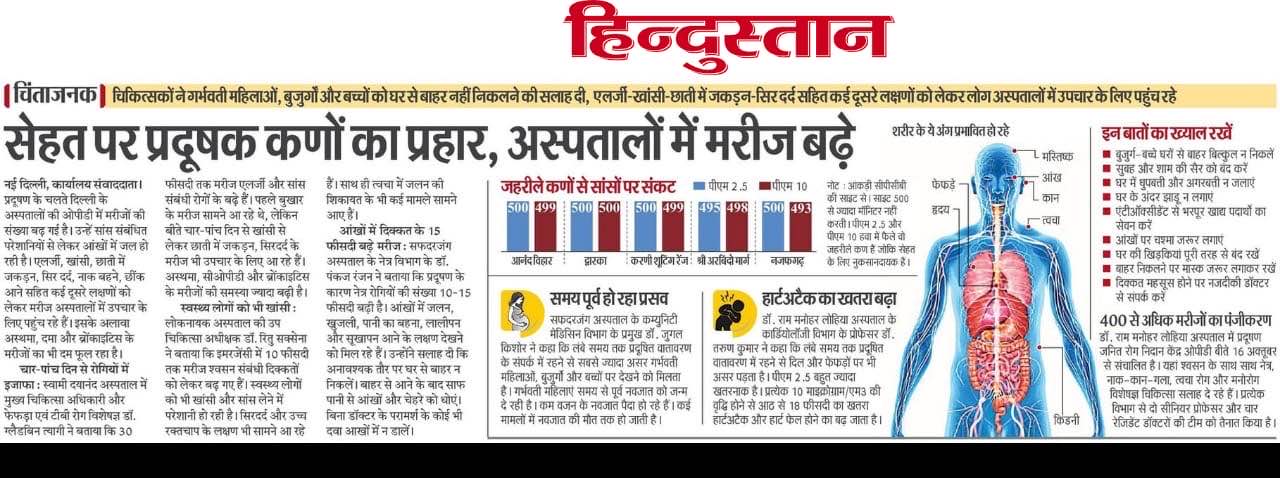
Air pollution is a growing concern in urban areas, and its impact on health is more severe than most people realize. According to a recent report, polluted air is not only affecting our lungs but also causing serious damage to other vital organs, leading to a sharp rise in hospital admissions. Dr. Ram Manohar Shukla, a senior cardiologist, sheds light on how air pollution contributes to heart attacks, strokes, and other health issues. In this blog, we’ll explore the effects of air pollution on the body and what you can do to protect yourself.
The Alarming Rise in Hospital Admissions Due to Air Pollution
The article highlights a significant increase in hospital admissions due to air pollution. Data shows that emergency visits for respiratory issues have risen by 5%, while heart-related cases have surged by 10%. Over the past decade (2010–2020), hospital admissions for air Middle East Asia (MEA) have increased by 15% annually, with 500 cases in 2010 growing to 579 by 2020. This trend is particularly alarming in cities like Delhi, where the Air Quality Index (AQI) often exceeds 400—categorized as “severe.”
How Air Pollution Affects Your Body
Air pollution contains harmful pollutants like particulate matter (PM2.5 and PM10), nitrogen dioxide, and sulfur dioxide, which can penetrate deep into the body. Dr. Ram Manohar Shukla explains that these pollutants cause widespread damage:
- Lungs: Pollutants irritate the airways, leading to asthma, bronchitis, and chronic obstructive pulmonary disease (COPD).
- Heart: PM2.5 particles enter the bloodstream, causing inflammation that increases the risk of heart attacks and strokes.
- Brain: Long-term exposure to polluted air is linked to cognitive decline and a higher risk of stroke.
- Liver and Kidneys: Toxins in the air can overburden these organs, impairing their ability to detoxify the body.
- Immune System: Pollution weakens immunity, making you more susceptible to infections.
Children, the elderly, and those with pre-existing conditions are especially vulnerable, as their bodies struggle to cope with the added stress of polluted air.
The Hidden Dangers of Air Pollution
While the immediate effects of air pollution—like coughing or throat irritation—are well-known, its long-term impact is even more concerning. The article notes that air pollution contributes to 400 additional heart attack cases annually in polluted regions. It also exacerbates conditions like diabetes and hypertension, which further strain the heart and increase the risk of cardiovascular events.
Steps to Protect Yourself from Air Pollution
Reducing exposure to air pollution is crucial for maintaining good health. Here are some practical tips:
- Monitor Air Quality: Check the AQI in your area and avoid outdoor activities on days when pollution levels are high.
- Use Air Purifiers: Invest in a HEPA-filter air purifier for your home to reduce indoor pollutants.
- Wear a Mask: Use an N95 mask when stepping outside in heavily polluted areas.
- Stay Indoors During Peak Hours: Pollution levels are often highest in the early morning and late evening—limit outdoor exposure during these times.
- Support Clean Air Initiatives: Advocate for stricter emission norms and the use of renewable energy to reduce pollution at its source.
Why We Need to Act Now
Air pollution is a silent killer, contributing to millions of premature deaths worldwide each year. In India alone, it’s estimated that 1.67 million deaths in 2019 were linked to air pollution, according to a study by The Lancet. With hospital admissions on the rise, the burden on healthcare systems is increasing, making it more important than ever to address this crisis. Dr. Shukla emphasizes that collective action—combined with individual precautions—can make a significant difference in improving air quality and safeguarding public health.
Conclusion
Air pollution is more than an environmental issue—it’s a public health emergency that affects every organ in your body. From increasing hospital admissions to raising the risk of heart attacks and strokes, its impact is profound and far-reaching. By taking steps to protect yourself and advocating for cleaner air, you can reduce your risk and contribute to a healthier future. Let’s act now to breathe easier tomorrow.