
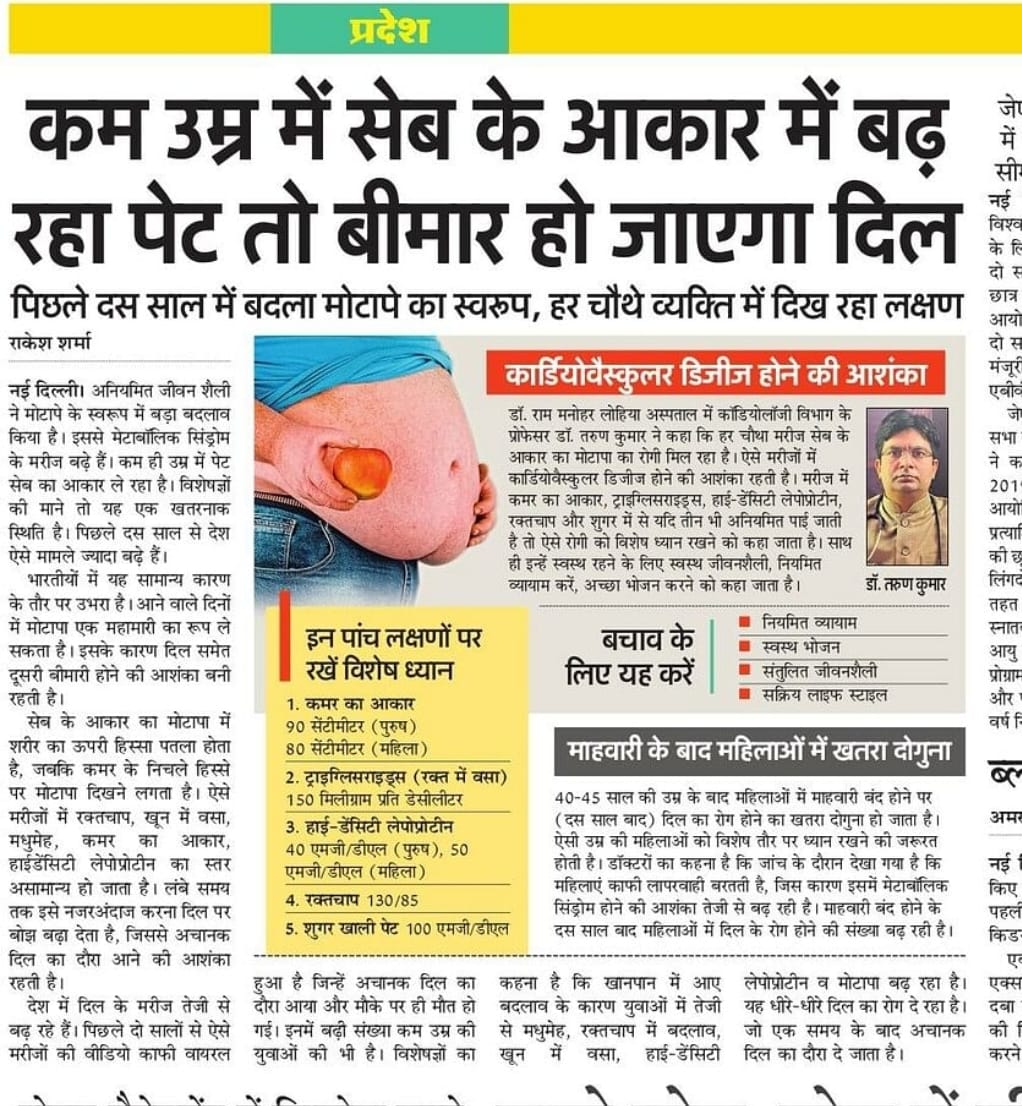
Over the past decade, Delhi has seen a dramatic rise in obesity among its youth, a trend that is now being linked to an alarming increase in cardiovascular diseases. A recent article published in the Pradesh section of a Hindi newspaper sheds light on this growing health crisis, emphasizing the risks of obesity, particularly for women after menopause, and the urgent need for awareness and lifestyle changes. With insights from cardiologist Dr. Tarun Kumar, this blog explores the causes, risks, and preventive strategies to combat this escalating epidemic.
The Obesity Crisis in Delhi: A Decade of Change
The article reports a stark statistic: over the last 10 years, the body shape of Delhi’s youth has shifted significantly, with an estimated 80–90% of young adults now classified as obese (Body Mass Index, or BMI, of 30 or higher). This rise in obesity is not just a cosmetic concern—it’s a major risk factor for cardiovascular diseases, which are increasingly affecting younger populations.
Dr. Tarun Kumar, a professor of cardiology at a leading hospital in Delhi, warns that this trend is a ticking time bomb. He notes that obesity, especially abdominal obesity (often referred to as an “apple-shaped” body), is a key driver of heart disease. In the past, heart disease was primarily associated with older adults, but now, young adults in their 20s and 30s are showing up in hospitals with serious cardiovascular issues, largely due to lifestyle factors.
The Link Between Obesity and Cardiovascular Disease
Obesity contributes to heart disease through several mechanisms, as outlined in the article:
- Increased Blood Pressure: Excess weight puts additional strain on the heart, leading to hypertension, a major risk factor for heart attacks and strokes.
- High Cholesterol: Obesity often leads to elevated levels of LDL (bad cholesterol) and triglycerides, which clog arteries and restrict blood flow to the heart.
- Diabetes: Obesity is a leading cause of type 2 diabetes, which damages blood vessels and increases the risk of heart disease.
- Inflammation: Excess fat, especially around the abdomen, triggers chronic inflammation, which can damage the cardiovascular system over time.
Dr. Kumar emphasizes that these conditions often develop silently, with many young adults unaware of their deteriorating health until a sudden cardiac event occurs.
Special Focus: Women After Menopause
The article highlights a particularly concerning trend: women after menopause face double the risk of heart disease if they are obese. During menopause, the body undergoes hormonal changes, including a drop in estrogen levels, which naturally protects the heart. This hormonal shift, combined with obesity, significantly increases the risk of cardiovascular issues. Key factors include:
- Weight Gain: Post-menopause, women often gain weight, particularly around the abdomen, due to slower metabolism and hormonal changes.
- Lipid Profile Changes: Cholesterol levels tend to rise after menopause, exacerbating the risk of artery blockages.
- Sedentary Lifestyle: Many women reduce physical activity as they age, further compounding the risk.
Dr. Kumar stresses that women in this age group must be especially vigilant, as heart disease symptoms in women can be subtler than in men, often presenting as fatigue, shortness of breath, or nausea rather than classic chest pain.
Warning Signs of Cardiovascular Disease
The article lists five critical symptoms of heart disease that young adults and post-menopausal women should not ignore:
- Chest Pain or Discomfort: A feeling of pressure, tightness, or burning in the chest, especially during physical activity.
- Shortness of Breath: Difficulty breathing, even with minimal exertion, can indicate heart trouble.
- Excessive Sweating: Sudden, unexplained sweating, particularly when accompanied by other symptoms.
- Dizziness or Fainting: Feeling lightheaded or fainting can signal a lack of blood flow to the brain due to heart issues.
- Pain in Other Areas: Discomfort radiating to the arms, jaw, back, or stomach, often mistaken for indigestion.
The article urges readers to seek immediate medical attention if these symptoms persist for more than a few minutes, as timely intervention can prevent fatal outcomes like sudden cardiac arrest.
Preventive Measures: Protect Your Heart
Dr. Kumar and the article provide practical advice to reduce the risk of cardiovascular disease, particularly for those struggling with obesity:
- Maintain a Healthy Weight:
- Aim for a BMI below 25 through a balanced diet and regular exercise.
- Focus on reducing abdominal fat, which is particularly harmful to heart health.
- Adopt a Heart-Healthy Diet:
- Incorporate more fruits, vegetables, whole grains, and lean proteins.
- Limit processed foods, sugary drinks, and trans fats.
- Opt for healthy fats like those found in nuts, seeds, and olive oil.
- Stay Active:
- Engage in at least 30 minutes of moderate exercise (e.g., brisk walking, cycling) five days a week.
- Include strength training to improve metabolism and overall cardiovascular health.
- Monitor Health Metrics:
- Regularly check blood pressure, cholesterol, and blood sugar levels.
- If you’re post-menopausal or have a family history of heart disease, consult a cardiologist for personalized screening.
- Manage Stress and Sleep:
- Practice stress-reduction techniques like meditation or yoga to lower blood pressure.
- Ensure 7–8 hours of quality sleep per night to support overall heart health.
The Urgency of Awareness: A Call to Action
The article underscores the need for greater awareness about the link between obesity and heart disease, particularly among young adults and post-menopausal women. In Delhi, where lifestyle diseases are on the rise, public health campaigns are crucial to educate people about the risks of obesity and the importance of early intervention.
Dr. Kumar advocates for routine health check-ups, especially for those with risk factors like obesity, diabetes, or a family history of heart disease. He also calls for community-level initiatives, such as promoting physical activity in schools and workplaces, to address the obesity epidemic at its root.
Conclusion: A Healthier Future Starts Today
The rise in obesity and cardiovascular disease among Delhi’s youth is a stark reminder that health cannot be taken for granted. The tragic reality is that many of these conditions are preventable with simple lifestyle changes. For young adults, the focus should be on maintaining a healthy weight, staying active, and being aware of warning signs. For women after menopause, the stakes are even higher, making regular health monitoring and proactive care essential.
Let’s take this as a wake-up call to prioritize our heart health. By making small, consistent changes—eating better, moving more, and staying informed—we can reduce the burden of cardiovascular disease and build a healthier future for ourselves and our communities.