
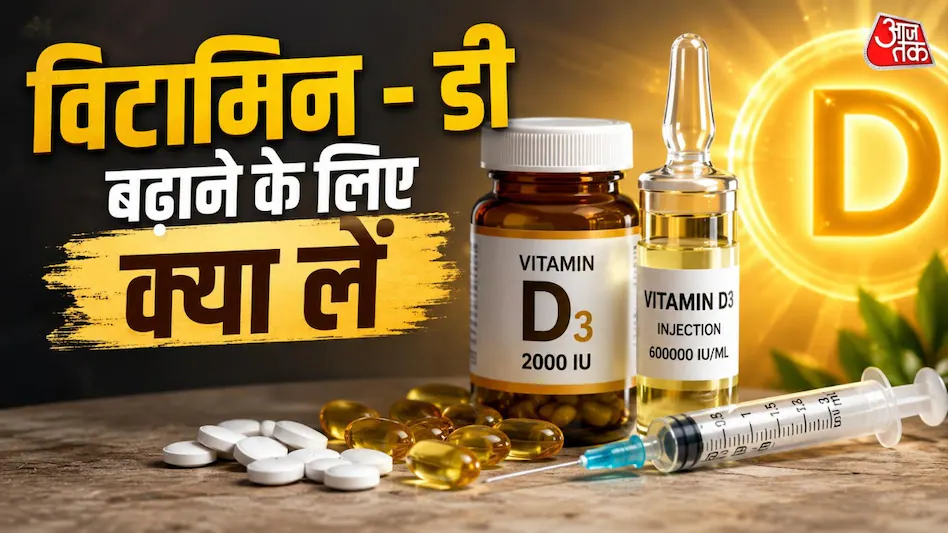
Vitamin D deficiency has become a common problem these days, leading to bone weakness and muscle problems. Learn when doctors recommend medication,injections, or supplements.
Vitamin D deficiency has become a common problem these days. Tests can detect the deficiency. If the vitamin D level is below 20 ng/mL, doctors medication, injections, or supplements. However, many people are not aware of the level of vitamin D and what to take. Therefore, it is important for you to know this.
Vitamin D is essential for calcium absorption, bone strength, and muscle function. However, a reported low vitamin D level doesn’t always warrant treatment. Treatment depends on blood 25(OH) vitamin D levels, a person’s symptoms, and other factors. In some cases, sun exposure and a healthy diet may be enough.
Dr. Tarun Kumar, a professor at Medanta Medicity Moolchand Hospital, has spoken about this. Dr. Tarun explains that if a person’s vitamin D level is between 20–30 ng/mL and they are asymptomatic, then 15–30 minutes of sunlight (with the face, hands, and feet exposed) 4–5 days a week can maintain the level. Additionally, it’s important to pay attention to your diet. You can include egg yolks, fish, fortified milk, and mushrooms in your diet.
When is a supplement (tablet/capsule) needed?
In cases where the vitamin D level is less than 20 ng/mL, there is bone or muscle pain, weakness or frequent falls, osteoporosis, elderly, pregnant, obese, kidney or liver disease, or absorption problems (such as celiac disease), doctors may prescribe a high dose of vitamin D3 for a few weeks, then continue with a maintenance dose.
When is an injection needed?
Injections are not necessary for every patient. They may be needed if the deficiency is severe (less than 5 ng/dL) and levels need to be raised quickly. The patient cannot swallow the medication. Vitamin D absorption from the intestines is poor. The doctor feels that regular pill administration will be difficult.
Should I take Vitamin D without testing?
Dr. Tarun explains that no one should take any vitamin D medicine or injection without getting their vitamin D levels tested. Doing so can lead to problems like kidney stones and constipation. A normal range of vitamin D above 20 ng/mL is considered healthy. 30 to 50 ng/mL is considered very good, but if it exceeds 50 ng/mL, it is called vitamin D toxicity, which is not good for health. Regarding low vitamin D levels, a level below 20 ng/mL is considered a deficiency, and below 12 ng/mL is considered a severe deficiency.